Tuesday, July 3, 2012

UK watchdog and BoE may have missed Libor red flags

NEW YORK/LONDON (Reuters) - Officials from the Bank of England and Britain's financial watchdog missed several opportunities to investigate how banks set the London interbank offered rate, now the subject of a scandal that has forced the resignation of the chairman of Barclays, according to U.S. and UK government records.

British regulators or the association charged with overseeing Libor were told at least five times since 2007 that fault lines existed in the way the rate was set.

Critical questions were raised in 2007 when in the autumn eight Bank of England officials, including Paul Tucker, now deputy governor, held a regular money market committee meeting with an official from the Financial Services Authority (FSA) as well as executives from the world's biggest banks.

As usual, an official from the British Bankers' Association (BBA), charged with the oversight of Libor, was also present.

Minutes of the meeting reveal attendees discussed the fact that Libor rates were lower than actual bank-borrowing rates. The minutes noted that, "Libor indices needed to be of the highest quality given their important role as a benchmark."

Now, nearly five years later, the same problem raised in that meeting -- and other meetings or phone conversations involving UK and U.S. financial regulators -- are at the heart of investigations that led last week to a $453 million fine against Barclays for playing a role in rigging the global rate that underpins trillions of dollars of derivatives and loans.

More than a dozen other banks are being investigated in the long-running global probe by authorities in North America, Europe and Japan, including Citigroup, HSBC, UBS and Royal Bank of Scotland.

Analysts and bankers expect more big fines.

QUIET DEBATE

A review of meetings held by a UK financial industry group, along with regulatory documents filed last week in the U.S. and UK, show how questions about Libor were debated quietly, out of public view, for years even as banks allegedly manipulated the rate for profits or to mask ailing financial health.

The regulatory documents detailing how Barclays attempted to manipulate the rate were filed last week by the Commodity Futures Trading Commission and the Justice Department in the U.S. and the FSA in the UK.

According to the FSA, "individuals at Barclays raised concerns with the FSA, the Bank of England, the Federal Reserve Bank of New York and the BBA about the accuracy of Libor submissions."

The New York Fed was not immediately available to comment.

According to people familiar with the matter, one chat was between Barclays Chief Executive Bob Diamond and Tucker, who is seen as a candidate to become BoE governor next year, and who was executive director for markets from 2002 to 2009.

Diamond has so far survived the scandal but on Monday, Barclays Chairman Marcus Agius quit, citing "the devastating blow" to Barclays reputation. Diamond and Agius, are expected to appear before UK lawmakers on Wednesday and Thursday and are likely to face stiff questioning about what regulators knew.

An FSA spokesperson declined comment. The BBA said it is cooperating with regulators. A review of how Libor is set began in March.

More details about the conversation between Tucker and Diamond could shed light on how the bank set its borrowing costs. Some at Barclays, according to the CFTC, mistakenly believed the bank had been granted permission to submit low borrowing costs after that conversation.

A spokesman for the Bank of England said on Monday it had not been aware of improper setting of Libor or manipulation.

"It is nonsense to suggest that the Bank of England was aware of any impropriety in the setting of Libor," the spokesman said. "If we had been aware of attempts to manipulate Libor, we would have treated them very seriously."

The BBA has coordinated Libor since the 1980s in a process which is not officially regulated. The rates are compiled and distributed for the trade body each day by news and information provider Thomson Reuters, parent company of Reuters.

The figures are designed to reflect rates at which top banks believe they could borrow money from each other in 10 major currencies and for 15 borrowing periods, from overnight loans to 12 months. By submitting false borrowing costs, banks could profit on derivative trades or avoid signalling to the market they were riskier than competitors.

In late 2007 and in 2008, when financial markets were in turmoil following the collapse of Lehman Brothers, Barclays artificially lowered its Libor submissions to avoid creating the perception that it was in trouble, but said other banks were also guilty of similar actions.

The FSA and CFTC documents detail multiple times when Barclays traders sought to manipulate Libor between 2005 and 2009. In September 2007, a Barclays manager asked the bank's compliance office what the bank's legal obligations were in contributing to the Libor calculation "when there are no trades in the market."

A big problem in calculating Libor has been that banks submit borrowing costs for maturities such as six or 12 months when they aren't actually borrowing money for those time periods.

Two months later, on November 15, a financial industry meeting was held. The meeting was for the Sterling Money Markets Liaison Group.

Formed in 1999, the group includes bankers and trade associations and meets quarterly with regulators to discuss a critical part of the UK financial plumbing system - how banks borrow money for short periods of time in the interbank market.

The meeting was held during the advent of the financial crisis as problems with subprime mortgages in the U.S. began to cause problems globally. In recent months, a top U.S. subprime mortgage lender called New Century Financial Corp. had imploded.

Elsewhere, investment bank Bear Stearns was in trouble, in France, a bank had suspended withdrawals from three investment funds and the European Central Bank (ECB) had injected billions of short-term funds into the financial system to lower spiking money-market interest rates.

Some three dozen people participated, including bankers from Barclays, Citigroup, JP Morgan Chase, Royal Bank of Scotland, Deutsche, Goldman Sachs, HSBC Holdings and Lloyds. Eight attended from the Bank of England, including Tucker.

According to the minutes, "Several group members thought that Libor fixings had been lower than actual traded interbank rates throughout the period of stress. Libor indices needed to be of the highest quality given their important role as a benchmark for corporate lending and hedging, and as a reference rate for derivatives contracts."

A BBA official told the group how it handled "quality control and safeguard measures used by the BBA to ensure the quality of Libor." The official said "dispersion" between what banks submitted had increased but had since lessened, partially "reflecting clarification from the BBA on Libor definitions."

Yet some two weeks later, in late November, 2007, a Barclays employee responsible for submitting Libor borrowing costs said in an email that Libor was "not reflecting the true cost of money ... Not really sure why contributors are keeping them so low but it is not a good idea at the moment to be seen to be too far away from the pack," according to the FSA regulatory filing.

The next day, a Barclays employee charged with submitting borrowing costs was "overruled" in submitting too high a cost during a phone conversation. During that discussion, the group "discussed their belief that other banks were submitting unrealistically low rates and speculated that other banks were basing submissions on derivatives' positions," according to the CFTC and FSA regulatory filings.

According to the CFTC filing, a Barclays treasury manager then phoned the BBA "and stated that he believed that Libor panel banks, including Barclays, were submitting rates that were too low because they were afraid to ?stick their heads above the parapet.'"

But the warning signal apparently did not go far. The Barclays official even "encouraged the BBA to react and be heavy-handed, suggesting the sanction that banks involved in such conduct be removed" from the Libor panel.

According to the CFTC, the BBA then emailed a steering committee - made up of the very banks submitting borrowing costs for Libor - to request "views on whether rates were artificially low and how to address this."

A few days later, problems increased inside Barclays and this time led to a conversation with the FSA, according to the FSA filing.

On December 4, according to the FSA filing, a Barclays employee who submitted the bank's Libor costs emailed a manager: "Feeling increasingly uncomfortable about the way in which (US dollar) libors are being set by the contributor banks, Barclays included. ? My worry is that we (both Barclays and the contributor bank panel) are being seen to be contributing patently false rates. We are therefore being dishonest by definition and are at risk of damaging our reputation in the market and with the regulators."

The internal whistleblower's concerns were "escalated" to bank compliance which two days later contacted the FSA. According to the FSA filing, "Compliance relayed an unspecific concern about the levels at which other banks were setting U.S. dollar Libor."

The FSA regulatory filing noted that the Barclays compliance office didn't confess that the bank's own submissions were improper. The FSA filing also said that Barclays' compliance office told the FSA that bank's submissions "could be justified although there may be a difference of opinion as to where Libor should be set given the liquidity conditions at the time."

According to the filing, the compliance official internally said that the FSA had "agreed that the approach we've been adopting seems sensible in the circumstances, so I suggest we maintain status quo."

By the spring of 2008, more questions surfaced in a conversation between Barclays and the BBA. At one point, a Barclays treasury official told the BBA in a phone call that the bank "had not been reporting accurately."

"We're clean, but we're dirty clean, rather than clean-clean," the Barclays official said. The BBA official, according to the CFTC filing, responded, "No one's clean-clean."

In August 2008, a month before the financial crisis spiralled with the implosion of Lehman Brothers, the BBA said it had reviewed how Libor was set and "concluded from the contributing panel bank's comments, including Barclays, that the contributing banks were confident that their submissions reflected the costs of borrowing" in the market and that "the existing process for Libor submissions was appropriate," according to the CFTC filing.

Months later, on September 16, 2009, the Bank of England's Money Markets Liaison Group held a meeting. Nine representatives from the Bank of England attended, as did bankers from Barclays, Deutsche, Goldman Sachs, JP Morgan, Lloyds and RBS.

During the meeting, a BBA official said the association was finishing a new governance structure for Libor. The official also said "there had been some isolated errors in the inputting of Libor submissions by banks recently. The fixings would not be recomputed unless the process as a whole had been compromised, which had not been the case recently."

(Additional reporting by Sven Egenter and Huw Jones in London; Editing by Alexander Smith and Giles Elgood)

Source: http://news.yahoo.com/uk-watchdog-boe-may-missed-libor-red-flags-171658541--sector.html

epidermolysis bullosa miss wisconsin law abiding citizen golden globes 2012 miss america lana del rey saturday night live focus on the family

(Lady of the) Evening Links (Theagitator)

Share With Friends: Share on FacebookTweet ThisPost to Google-BuzzSend on GmailPost to Linked-InSubscribe to This Feed | Rss To Twitter | Politics - Top Stories Stories, News Feeds and News via Feedzilla.

Source: http://news.feedzilla.com/en_us/stories/politics/top-stories/237030386?client_source=feed&format=rss

sarah palin today show dallas tornado video 1940 census instagram for android dallas news dallas fort worth dfw

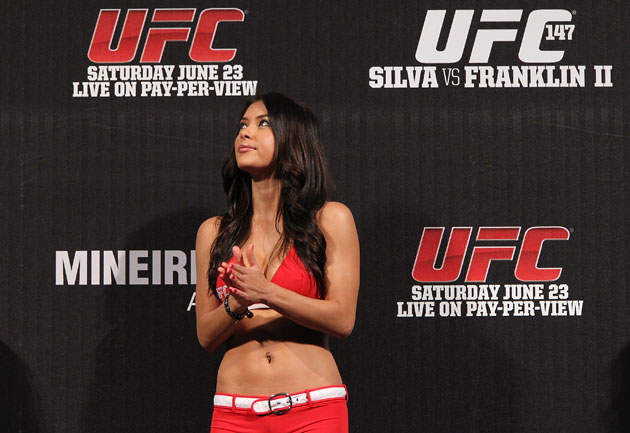
Charges against Octagon Girl Arianny Celeste dropped

Charges against UFC Octagon Girl Arianny Celeste were dropped. She had been charged with domestic abuse stemming from an incident with her then-boyfriend on Memorial Day weekend.

The Las Vegas district attorney's office found there was not enough evidence to warrant a move forward, according to MMA Junkie. Her arrest came the night before UFC 146, forcing her to miss the preliminary card and part of the main card. Celeste did show up for her duties for the? final bouts.

Source: http://sports.yahoo.com/blogs/mma-cagewriter/charges-against-octagon-girl-arianny-celeste-dropped-213506492--mma.html

pittsburgh penguins record store day jennie garth space needle nashville predators king arthur king arthur

Monday, July 2, 2012

North Carolina lawmakers override race-bias death-row veto

[ [ [['Connery is an experienced stuntman', 2]], 'http://yhoo.it/KeQd0p', '[Slideshow: See photos taken on the way down]', ' ', '630', ' ', ' ', ], [ [['Connery is an experienced stuntman', 7]], ' http://yhoo.it/KpUoHO', '[Slideshow: Death-defying daredevils]', ' ', '630', ' ', ' ', ], [ [['know that we have confidence in', 3]], 'http://yhoo.it/LqYjAX ', '[Related: The Secret Service guide to Cartagena]', ' ', '630', ' ', ' ', ], [ [['We picked up this other dog and', 5]], 'http://yhoo.it/JUSxvi', '[Related: 8 common dog fears, how to calm them]', ' ', '630', ' ', ' ', ], [ [['accused of running a fake hepatitis B', 5]], 'http://bit.ly/JnoJYN', '[Related: Did WH share raid details with filmmakers?]', ' ', '630', ' ', ' ', ], [ [['accused of running a fake hepatitis B', 3]], 'http://bit.ly/KoKiqJ', '[Factbox: AQAP, al-Qaeda in Yemen]', ' ', '630', ' ', ' ', ], [ [['have my contacts on or glasses', 3]], 'http://abcn.ws/KTE5AZ', '[Related: Should the murder charge be dropped?]', ' ', '630', ' ', ' ', ], [ [['have made this nation great as Sarah Palin', 5]], 'http://yhoo.it/JD7nlD', '[Related: Bristol Palin reality show debuts June 19]', ' ', '630', ' ', ' ', ], [ [['have made this nation great as Sarah Palin', 1]], 'http://bit.ly/JRPFRO', '[Related: McCain adviser who vetted Palin weighs in on VP race]', ' ', '630', ' ', ' ', ], [ [['A JetBlue flight from New York to Las Vegas', 3]], 'http://yhoo.it/GV9zpj', '[Related: View photos of the JetBlue plane in Amarillo]', ' ', '630', ' ', ' ', ], [ [['the 28-year-old neighborhood watchman who shot and killed', 15]], 'http://news.yahoo.com/photos/white-house-stays-out-of-teen-s-killing-slideshow/', 'Click image to see more photos', 'http://l.yimg.com/cv/ip/ap/default/120411/martinzimmermen.jpg', '630', ' ', 'AP', ], [ [['He was in shock and still strapped to his seat', 6]], 'http://news.yahoo.com/photos/navy-jet-crashes-in-virginia-slideshow/', 'Click image to see more photos', 'http://l.yimg.com/cv/ip/ap/default/120406/jet_ap.jpg', '630', ' ', 'AP', ], [ [['xxxxxxxxxxxx', 11]], 'http://news.yahoo.com/photos/russian-grannies-win-bid-to-sing-at-eurovision-1331223625-slideshow/', 'Click image to see more photos', 'http://l.yimg.com/a/p/us/news/editorial/1/56/156d92f2760dcd3e75bcd649a8b85fcf.jpeg', '500', ' ', 'AP', ] ]

[ [ [['did not go as far his colleague', 8]], '29438204', '0' ], [ [[' the 28-year-old neighborhood watchman who shot and killed', 4]], '28924649', '0' ], [ [['because I know God protects me', 14], ['Brian Snow was at a nearby credit union', 5]], '28811216', '0' ], [ [['The state news agency RIA-Novosti quoted Rosaviatsiya', 6]], '28805461', '0' ], [ [['measure all but certain to fail in the face of bipartisan', 4]], '28771014', '0' ], [ [['matter what you do in this case', 5]], '28759848', '0' ], [ [['presume laws are constitutional', 7]], '28747556', '0' ], [ [['has destroyed 15 to 25 houses', 7]], '28744868', '0' ], [ [['short answer is yes', 7]], '28746030', '0' ], [ [['opportunity to tell the real story', 7]], '28731764', '0' ], [ [['entirely respectable way to put off the searing constitutional controversy', 7]], '28723797', '0' ], [ [['point of my campaign is that big ideas matter', 9]], '28712293', '0' ], [ [['As the standoff dragged into a second day', 7]], '28687424', '0' ], [ [['French police stepped up the search', 17]], '28667224', '0' ], [ [['Seeking to elevate his candidacy back to a general', 8]], '28660934', '0' ], [ [['The tragic story of Trayvon Martin', 4]], '28647343', '0' ], [ [['Karzai will get a chance soon to express', 8]], '28630306', '0' ], [ [['powerful storms stretching', 8]], '28493546', '0' ], [ [['basic norm that death is private', 6]], '28413590', '0' ], [ [['songwriter also saw a surge in sales for her debut album', 6]], '28413590', '1', 'Watch music videos from Whitney Houston ', 'on Yahoo! Music', 'http://music.yahoo.com' ], [ [['keyword', 99999999999999999999999]], 'videoID', '1', 'overwrite-pre-description', 'overwrite-link-string', 'overwrite-link-url' ] ]

Source: http://news.yahoo.com/north-carolina-lawmakers-override-race-bias-death-row-011700896.html

prince johan friso windows 8 logo anguilla gone with the wind michael jordan checkers imbibe

Weight-Loss Drug Wins U.S. Approval

obesity drug approved, diabetes, heart disease People with a high body mass index who lose weight reduce the risk of health problems such as diabetes or heart disease. Image: Jose Luis Pelaez, Inc./Blend Images/Corbis

From Nature magazine

After 13 suspenseful years, the US Food and Drug Administration (FDA) has approved a pill that could help to fight the US obesity epidemic.

Belviq (lorcaserin) is no wonder drug, but it can help people to lose about 3?4% of their body weight when combined with a healthy diet and exercise. The drug has been approved for use by obese people with a body mass index (BMI) greater than 30, and for a subset of overweight people (with a BMI of more than 27) who have health conditions such as high blood pressure, elevated cholesterol and type 2 diabetes.

?It?s a start in the right direction,? says Abraham Thomas, head of endocrinology at the Henry Ford Hospital in Detroit, Michigan, who chairs the FDA?s Endocrinologic and Metabolic Drugs Advisory Committee. ?We don?t have the tools to really treat obesity.?

Developed by Arena Pharmaceuticals of San Diego, California, Belviq faced a high bar for safety. In 1997, the weight-loss drug fenfluramine was pulled from the market for causing heart-valve problems. In the past two years, the FDA has rejected a total of?three obesity drugs because of concerns over safety or lack of efficacy. The FDA advisory committee recommended in March that all obesity drugs should go through tests for cardiovascular risks, which would extend already lengthy clinical trials.

The FDA had already rejected Arena?s first application for approval of Belviq in September 2010 because the compound seemed to produce tumours in rats and because the company could not statistically rule out an increase in the risk of heart-valve problems. Similar to fenfluramine, Belviq suppresses food cravings by mimicking the effects of serotonin in the brain, making people eat less and feel full. However, Belviq seems to activate only the serotonin 2C receptor in the brain, not the serotonin 2B receptor that is present in heart muscle.

The FDA?s turnaround this week came after Arena performed echocardiograms in nearly 8,000 people to measure heart-valve function, which revealed that there was no increase in heart-valve abnormalities among those taking the drug. The firm has agreed to run six post-marketing studies, including a long-term cardiovascular trial, and patients with congestive heart failure are advised not to take the drug.

?I felt the benefits outweighed the risk,? says Ida Johnson Spruill, the consumer representative on the FDA advisory committee and a diabetes specialist at the Medical University of South Carolina in Charleston. One-third of adults in the United States are obese, so regulators must balance the risks of a new weight-loss drug with the health consequences of obesity, including rising diabetes rates.

Weighing the benefits
Compared to the placebo, Belviq?s efficacy is about the same as that of orlistat, which was first approved in 1999 and blocks the uptake of fat calories. A 90-kilogram patient on Belviq loses, on average, an extra 3 kilograms (6?7 pounds) or so after a year. ?The good minimum weight loss would be in the 10?15-pound range,? notes endocrinologist Peter Savage of the National Heart, Lung, and Blood Institute in Bethesda, Maryland, ?That doesn?t mean that people who lose 5?8 pounds don?t do well.?

It would also be a mistake to reject a drug that works well for a subset of the patient population, says Thomas. About 20% of people on the drug lost 10% or more of their body weight. The FDA recommends that patients who have not lost 5% of body weight by week 12 stop taking the drug.

Belviq has also shown promise for people with type 2 diabetes, who were twice as likely to keep their blood sugars under control than those on the placebo.

?No medication works by itself,? says Patrick O?Neil, a clinical psychologist at the Medical University of South Carolina and lead author of the diabetes study. ?It?s not a replacement for diet, exercise, and lifestyle modification, but it can augment such programmes.?

This article is reproduced with permission from the magazine Nature. The article was first published on July 2, 2012.

Source: http://rss.sciam.com/click.phdo?i=a2cbe70ea186cb3156f6493c37ba6061

atlanta hawks flyers 2012 white house correspondents dinner forrest gump bernard hopkins nfl draft grades devils

The states that are dying for healthcare coverage

By Alexander E.M. Hess and Samuel Weigley, 24/7 Wall St.

The lack of medical coverage in America is a serious problem as approximately 50 million people were uninsured all through 2010. But the U.S. Supreme Court on Thursday ruled the Patient Protection and Affordable Care Act, which was passed in 2010, was constitutional. The legislation, once implemented in its entirety, is expected to cover 30 million Americans currently lacking coverage.

The lack of medical insurance has had grave consequences for individuals and the nation. In 2010 alone, 26,100 people died because they had no health insurance ? that amounts to 502 preventable deaths a week. However, some states fared better than others. Based on the latest report by Families USA, a health care consumer advocacy group, 24/7 Wall St. identified the 10 states with the highest number of deaths per 100,000 people due to a lack of insurance.

24/7 Wall St.: Eight states slashing local funding

Not surprisingly, nearly all of the states with the most residents dying due to a lack of insurance also had high numbers of uninsured residents. Seven of the states on the list were among the 10 states with the highest percentage of people without health coverage. Seven of the states were also in the bottom 10 for the lowest rates of private insurance coverage.

People without health insurance often forgo medical treatment for different reasons. According to Families USA, a supporter of President Obama?s health care reform law, uninsured adults are nearly four times more likely than insured adults to delay or avoid preventive care screening due to cost. Uninsured adults are also nearly seven times more likely to go without needed care due to cost than privately insured adults.

?You still see a very, very strong correlation between uninsurance and poor health-care outcomes ? including mortality ? and [that is] because people aren?t getting the type of care that they need,? Kim Bailey, the research director for Families USA, told 24/7 Wall St.

Many of the states with high death rates due to a lack of insurance also were among the poorest states in the country. The top seven states on this list also are among the 10 states with the highest poverty rates. Every state on this list is in the top half.

Poor health also appears to play an important role. States with high death rates due to lack of insurance had a high percentage of people with lifestyle-related risk factors for poor health. Of the states on our list, five of them have among the 10 highest percentages of smokers and among the 10 lowest percentages of people who eat vegetables at least three times a day. Four have among the 10 highest proportions of overweight or obese adults. Seven states on the list were in the bottom 10 in terms of life expectancy.

24/7 Wall St.: Countries that spend the most on health care

Based on Families USA?s report, ?Dying for Coverage: The Deadly Consequences of Being Uninsured,? 24/7 Wall St. identified the 10 states with the highest number of deaths from being uninsured per 100,000 residents. 24/7 Wall St. reviewed the methodology used by Families USA, first developed in 2002 by the Institute of Medicine, to determine?excess mortality from being uninsured. This method considers the proportion of?people who are insured and uninsured, the mortality risks for the uninsured and the number of expected deaths from a hypothetical fully insured population. 24/7 Wall St. also identified poverty rates and median income by state, provided by the U.S. Census Bureau. The Kaiser Family Foundation?s website ? Statehealthfacts.org ? provided health-related data, including life expectancy, obesity and diabetes rate.

These are the 10 states dying for health coverage.

1. Mississippi
? Excess deaths from a lack of insurance (per 100,000):?15.82
? Percent of population uninsured:?18.2 percent (ninth highest)
? Percent living below the poverty line:?22.4 percent (tied for the highest)
? Life expectancy at birth:?74.81 years (The lowest)

Many residents of Mississippi cannot afford insurance. The state has the lowest median income in the nation and the highest percentage of residents living below the poverty line. As a result, Mississippi has the second-lowest percentage of residents with private health insurance coverage, at 56.49 percent. Exacerbating the problem, residents are especially unhealthy. Among all states, Mississippi has the second-highest obesity rate, the second-highest percentage of adults with diabetes and the fifth-highest percentage of adult smokers in the nation. Probably on account of both high uninsurance rates and poor personal health, Mississippi is the only state where life expectancy was below 75 years at birth in 2010. Mississippi?s excess death rate was the highest among all states and twice that of 28 states in 2010.

2. Louisiana
? Excess deaths from a lack of insurance (per 100,000):?14.94
? Percent of population uninsured:?17.8 percent (10th highest)
? Percent living below the poverty line:?18.7 percent (sixth highest)
? Life expectancy at birth:?75.39 years (fourth lowest)

Louisiana has one of the lowest life expectancies at birth in the U.S. at 75.4 years. Though much of this certainly can be attributed to poor health choices ? the state has a higher number of smokers and its residents eat comparatively little fruit or vegetables ? the inability of?many residents to receive proper care due to lack of insurance is also a contributing factor. In Louisiana, 17.8 percent of the population goes without health insurance, despite the fact that 21.9 percent of the population qualifies for Medicaid ? the fifth-highest proportion among all 50 states. The high uninsurance rate is partly due to the relative economic disadvantage of the state?s residents. With 18.7 percent of residents living below the poverty line ? the sixth-highest rate in the nation ? and a median income that is more than $5,000 lower than the U.S. average, just 58.39 percent of state residents have private insurance. That is the fourth-lowest such rate in the nation.

3. Arkansas
? Excess deaths from a lack of insurance (per 100,000):?13.49
? Percent of population uninsured:?17.5 percent (tied for 12th highest)
? Percent living below the poverty line:?18.8 percent (fifth highest)
? Life expectancy at birth:?76.09 years (sixth lowest)

According to the Council for Community and Economic Research?s ACCRA Cost of Living Index, Arkansas had the second-lowest cost of health care in the United States. However, with 18.8 percent of the population living below the poverty line and a median annual household income of just $38,307 ? both among the lowest figures for any state ? many Arkansans cannot afford private health coverage. As a result, just 58.78 percent of the population has private insurance, the sixth-lowest figure in the country.

24/7 Wall St.: 10 brands that will disappear in 2013

4. South Carolina
? Excess deaths from a lack of insurance (per 100,000):?13.48
? Percent of population uninsured:?17.5 percent (tied for 12th highest)
? Percent living below the poverty line:?18.2 percent (seventh highest)
? Life expectancy at birth:?76.57 years (ninth lowest)

South Carolina is not a particularly healthy state: 67.4 percent of the state?s residents are either overweight or obese, just 23.3 percent eat proper amounts of fruit, only 22.9 percent eat proper amounts of vegetables and 10.7 percent are diabetic. All of these are among the highest rates in the country. Meanwhile, much of the cost of health care falls to private individuals. The state spent about $6,300 per person on health care in 2009, among the lowest levels, and just 51.9 percent of residents have employer-based health coverage. Unfortunately, South Carolinians have trouble affording insurance on their own: Median income was just $42,000 in 2010, significantly lower than the $50,000 national average, 18.2 percent of residents live below the poverty line and the cost of health care is higher than is the case in many states.

5. New Mexico
? Excess deaths from a lack of insurance (per 100,000):?12.15
? Percent of population uninsured:?19.6 percent (sixth highest)
? Percent living below the poverty line:?20.4 percent (tied for the highest)
? Life expectancy at birth:?78.21 years (20th lowest)

New Mexico has a fairly healthy population, with relatively low heart disease and obesity rates. However, just 55.8 percent of residents have private health insurance ? the lowest rate of any state in the country. One possible reason is that few employers provide insurance ? just 45.6 percent of the population has employer-based health coverage. The relative poverty of the state also means many residents cannot afford medical coverage. The median income in the state was just above $42,000 in 2010, far below the national median of about $50,000, while 20.4 percent of people live below the poverty line ? the highest rate in the country.

Click here to read the rest of 24/7 Wall St.'s analysis of states' death rates

More money and business news:

Follow msnbc.com business on Twitter and Facebook

Source: http://bottomline.msnbc.msn.com/_news/2012/07/01/12419471-the-states-that-are-dying-for-healthcare-coverage?lite

matt flynn denver news frozen planet creighton new smyrna beach st. joseph walking dead

Sunday, July 1, 2012

Annan: Nations back Syria transition plan

Handout / Reuters

Demonstrators protest against Syria's President Bashar al-Assad after Friday prayers in Habeet, near Idlib, Friday

By msnbc.com staff and news services

Updated 1:30 p.m. ET: Major Western and Arab powers meeting in Geneva on Saturday?adopted a watered-down version of special envoy Kofi Annan's Syria peace plan that leaves open whether President Bashar al-Assad can be part of the transition government.

"It is for the people of Syria to come to a political agreement." Annan said.?"I will doubt that the Syrians who have fought so hard to have independence ... will select people with blood on their hands to lead them," he said.

U.S. Secretary of State Hillary Clinton said the deal in Geneva "paves the way" for a post-Assad unity government. Assad should hear "loudly and clearly" that his days are numbered, she said. "It is now incumbent on Russia and China to show Assad the writing on the wall," Clinton said.


Russia had refused to back a provision that would call for Assad to step down, insisting that outsiders cannot order a political solution for Syria.

Russian Foreign Minister Sergei Lavrov underscored the point that the plan does not require Assad's ouster, saying there is "no attempt in the document to impose on the Syrian people any type of transitional process."

Lavrov warned that there is an attempt to provoke a spiral of violence and incite sectarian hatred in Syria.

A transitional governing body could include members of the current government and opposition and would be formed by mutual consent, Reuters reported. The?pact calls for constitutional reform and free and fair elections, Reuters reported.

Annan said the Syria action group nations did not set a time for its next meeting.

On Friday, Syrian troops shelled a suburb of Damascus, killing an estimated 125 civilians and 60 soldiers, Syrian human rights activists said.?The uprising in Syria since March of last year has killed some 14,000 people.?

Syria on Saturday retook control of the restive Damascus suburb of Douma, where fleeing residents said most civilians?had cleared out.

Syria retakes Damascus suburb

Foreign ministers from Western powers and Arab countries?attended the?meeting convened by?Annan?to try to forge a common strategy to end the 16 month-old conflict in Syria but differences remained over the fate of?Assad.

Clinton held talks on Friday night in St. Petersburg with?Lavrov but failed to resolve differences, Reuters said.

Russia, Assad's main ally, insists that any transition plan must not be imposed on Syria by foreign powers.

French Foreign Minister Laurent Fabius, arriving for the talks, told Reuters that it was ?absolutely essential that the violence stops and that a political transition can begin.?

?Kofi Annan made reasonable propositions and I hope that they will be upheld and that's the point of today's discussions,? he added.

Syria rebels: Assad forces bombard towns as 170 tanks mass near city

Hopes have centered on persuading Russia ? Syria's most important ally, protector and arms supplier ? to agree to a plan that would end the four-decade rule of the Assad family dynasty.

But the Russians want Syria alone to be the master of its fate, at a time when Assad's regime and the opposition are increasingly bitterly polarized.

A bomb targeting Syria's highest court has exploded in Damascus. NBC's Bill Neely reports.

"Ultimately, we want to stop the bloodshed in Syria. If that comes through political dialogue, we are willing to do that," said Khalid Saleh, a spokesman for the Syrian National Council, a coalition of Syrian opposition groups based in Istanbul, Turkey. "We are not willing to negotiate (with) Mr. Assad and those who have murdered Syrians. We are not going to negotiate unless they leave Syria."

Turkey sends military convoys toward Syrian border

International tensions also heightened last week after Syria shot down a Turkish warplane, leading to Turkey setting up anti-aircraft guns on its border with its neighbor.?

More world news from msnbc.com and NBC News:

Follow World News on msnbc.com on Twitter and Facebook

?

Source: http://worldnews.msnbc.msn.com/_news/2012/06/30/12494159-annan-major-powers-back-syria-transition-plan-leaving-question-of-assad-open

nba news nba news florida gators hope solo hope solo texas high school football fugazi